How a single day of missile strikes on the Gulf’s energy heartland forced an unprecedented Arab-Muslim diplomatic coalition to confront Tehran with its gravest warning yet.
To understand what transpired in Riyadh on Wednesday, 18 March 2026, one must trace the origins of the crisis that is reshaping the Middle East at an unprecedented pace. On 28 February 2026, the United States and Israel launched coordinated air strikes and missile barrages against Iranian military installations, defence infrastructure, and key leadership facilities in a joint operation reportedly code-named Operation Lion’s Roar.
Iran’s retaliation was immediate and sweeping. Within an hour, ballistic missiles were fired at Tel Aviv, Haifa, and U.S. military bases in Bahrain, Qatar, Kuwait, and the United Arab Emirates. The region woke up the next morning to a fundamentally different reality. According to data from the Iranian Red Crescent, approximately 201 people were killed and 747 wounded across multiple Iranian provinces as a direct result of the U.S.-Israeli strikes. The human cost was rendered even more haunting when missiles struck a girls’ primary school in Minab, causing an unknown number of child casualties.
The timing added a layer of profound symbolism. The war erupted during the holy month of Ramadan — a period meant for spiritual reflection and peace. Critics, including several European allies, noted that the Trump administration appeared to lack a coherent post-war plan; diplomacy had been progressing when strikes suddenly commenced.
The Days Before Riyadh: Escalation Without Ceiling
Almost three weeks into the conflict, there were no signs of de-escalation. Arab League foreign ministers had already held an emergency video conference on 8 March 2026, convened at the request of Kuwait, Saudi Arabia, Qatar, Oman, Jordan, and Egypt. That meeting produced condemnatory language, but could not halt the spiral of violence.
On 18 March itself — the very day of the Riyadh gathering — Iran launched its most consequential strike yet: a direct assault on the energy infrastructure of the Gulf states. The context was significant. Israel had previously bombed Iran’s South Pars gas field, the world’s largest natural gas reservoir located off the coast of Bushehr province. Iran’s Islamic Revolutionary Guard Corps had explicitly warned that Qatar’s Ras Laffan, Saudi Arabia’s SAMREF refinery, and UAE’s Al Hosn gas facilities would face retaliation.
On 18 March, that threat became reality.
Ras Laffan in Flames: The World’s LNG Capital Under Attack
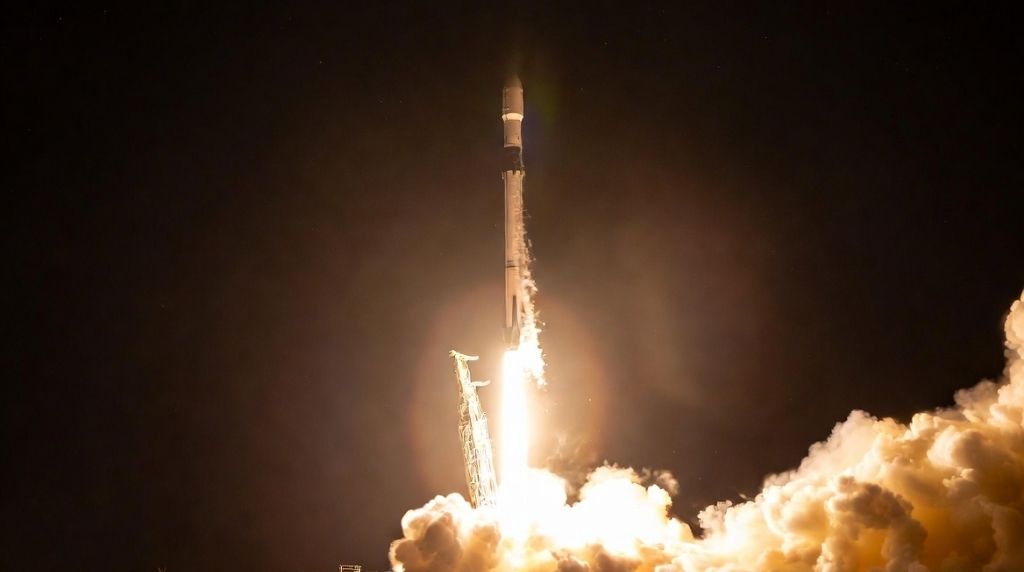
The most seismic development of the day was the missile strike on Qatar’s Ras Laffan Industrial City — arguably the most strategically critical energy facility on the planet. Ras Laffan, situated roughly 80 kilometres northeast of Doha, is responsible for producing approximately one-fifth of global LNG supply. QatarEnergy confirmed that one missile penetrated Qatar’s air defences after four others were intercepted, causing extensive fires and significant structural damage.
“We condemn and firmly reject Iran’s brazen attack targeting Ras Laffan Industrial City — a dangerous escalation, a clear violation of our sovereignty, and a direct threat to national security and regional stability.”
Qatar Ministry of Foreign Affairs
Qatar’s response was swift and punitive. The government declared the Iranian military attaché and all security personnel at the Iranian Embassy persona non grata, ordering their departure within 24 hours. The diplomatic expulsion underscored how severely Qatar felt the strike had violated the boundaries of state conduct.
The financial fallout on global energy markets was instantaneous. Brent crude surged more than 7 percent to USD 111.23 per barrel, while West Texas Intermediate rose approximately 4 percent to USD 100.04 per barrel. By the following day, Brent had climbed further to USD 116.38 per barrel — up from below USD 73 before the war began. European natural gas benchmarks (TTF) spiked more than 24 percent.
Simultaneously, Saudi Arabia’s air defence systems intercepted four Iranian ballistic missiles targeting Riyadh and two additional missiles aimed at the Eastern Province. The UAE reported intercepting 13 ballistic missiles and 27 drones in a single day. Operations at the UAE’s Habshan gas facility were suspended after debris from an intercepted missile caused collateral damage. Iran also struck two oil refineries in Kuwait, further tightening global energy markets already under severe strain from the closure of the Strait of Hormuz.
The Riyadh Meeting: Twelve Nations, One Voice
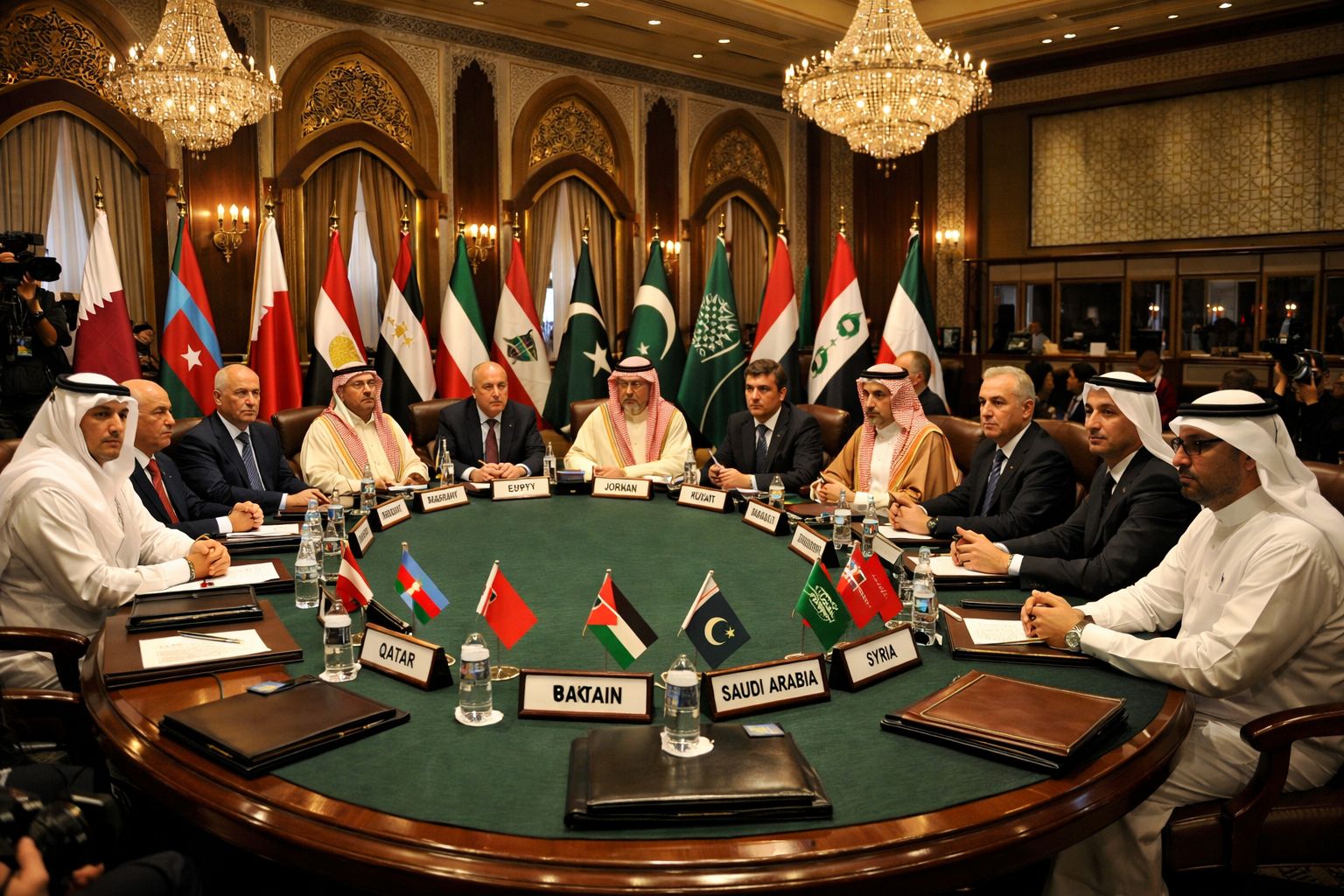
Against this backdrop of exploding infrastructure, surging oil prices, and diplomatic disbelief, Saudi Arabia convened an emergency consultative ministerial meeting at its capital. The 12 nations represented were:
- Qatar
- Azerbaijan
- Bahrain
- Egypt
- Jordan
- Kuwait
- Lebanon
- Pakistan
- Saudi Arabia (host)
- Syria
- Turkey
- United Arab Emirates
The gathering was notable not only for its breadth but for the political diversity it represented: Sunni-majority Arab states, a NATO member, a nuclear-armed South Asian country, a nation previously at odds with several Gulf states (Qatar), and one just emerging from years of regional isolation (Syria). The fact that all 12 aligned behind a single, forceful statement was itself a diplomatic statement.
The joint communiqué issued at the close of the meeting constituted one of the harshest collective rebukes ever directed at Iran by Muslim-majority nations. Signatories condemned what they described as Iran’s deliberate use of ballistic missiles and unmanned aerial vehicles to strike residential areas and civilian infrastructure, including oil facilities, desalination plants, airports, apartment buildings, and diplomatic missions.
Core Demands Presented to Iran
Demand 1: Immediate Cessation of Attacks. The ministers called on Iran to comply without delay with UN Security Council Resolution 2817 (2026), which mandates an immediate halt to all attacks, and demanded the unconditional cessation of all provocative actions or threats against neighbouring states.
Demand 2: End Support for Proxy Militias. Iran was formally demanded to discontinue its funding, arming, and direction of affiliated militias operating in Arab countries in furtherance of Iranian interests and against the interests of those host states.
Demand 3: Do Not Block the Strait of Hormuz. Participants urged Iran to refrain from any action or threat aimed at closing or disrupting international navigation through the Strait of Hormuz or maritime security in the Bab Al Mandab. Given that more than 20 percent of the world’s traded oil transits the Strait daily, this demand carried enormous global economic weight.
Demand 4: Respect Sovereignty as the Price of Normalisation. The ministers declared unambiguously that any future relationship with Iran would be conditioned entirely upon Tehran’s respect for the sovereignty of neighbouring states and the principle of non-interference in their internal affairs.
Demand 5: Invocation of the Right to Self-Defence. Citing Article 51 of the UN Charter, the nations collectively asserted their legal right to take defensive measures proportionate to the threat posed by Iranian actions.
Key Voices from the Summit
Saudi Arabia — Prince Faisal bin Farhan
The host nation’s foreign minister delivered the summit’s sharpest remarks in a press conference the following morning. Prince Faisal stated that Iran had spent more than a decade constructing and rehearsing this strike strategy — characterising the attacks not as improvised responses but as long-planned military objectives. He dismissed Iranian diplomatic denials, pointing to the precision of strikes as evidence of extensive premeditation.
“The level of accuracy in some of these targets shows this was something planned, prepared, organised, and thought through. The patience being shown is not without limits. Whether they have one day, two days, a week — I won’t tell them that.”
rince Faisal bin Farhan, Saudi Foreign Minister
Prince Faisal also warned that Saudi Arabia and its partners possess “significant capacity and capability” that could be deployed if they chose to do so — a thinly veiled military deterrent. On the prospect of future relations, he was bleak: trust, he said, had been “completely destroyed” by Iran’s strategy of targeting neighbours, and rebuilding it would take years even after the war eventually ends.
Turkey — Foreign Minister Hakan Fidan
Turkey’s position at the summit was the most nuanced. As a NATO member sharing a long border with Iran, Ankara had previously attempted to broker talks between Tehran and Washington before hostilities erupted. Fidan arrived in Riyadh pushing for a peace solution through negotiation and was expected to continue his shuttle diplomacy in the days that followed. Turkey officially condemned the U.S.-Israeli strikes against Iran as violations of international law, yet also declared Iran’s retaliatory strikes against Gulf states unacceptable — a dual condemnation that illustrated the diplomatic tightrope Ankara was walking.
Pakistan — Deputy PM & Foreign Minister Ishaq Dar
Pakistan’s participation reflected the breadth of the coalition Riyadh had assembled. Dar had previously criticised the initial strikes against Iran and had called for de-escalation. Yet Pakistan had also signed a mutual defence agreement with Saudi Arabia in September 2025, binding it to Gulf security commitments. Dar’s attendance signalled Islamabad’s alignment with the Gulf states’ demand for an end to Iranian aggression while stopping short of endorsing military retaliation.
Arab League Secretary-General — Ahmed Aboul Gheit
Though not a direct participant, Aboul Gheit issued a parallel statement condemning what he called Iran’s “blatant” assault on Ras Laffan and the broader pattern of attacks on Gulf energy infrastructure, warning of a “dangerous escalation” that threatened to destabilise the entire region.
The Global Energy Stakes
Analysts watching from outside the region have repeatedly emphasised that this conflict is not merely a regional security crisis — it is a global economic emergency in slow motion. The South Pars–North Dome reservoir, shared between Iran and Qatar, is the single largest natural gas field on Earth. The disruption of both South Pars (struck by Israel) and Ras Laffan (struck by Iran) in rapid succession has created extraordinary supply pressure in LNG markets already weakened by years of underinvestment.
Iraq separately reported that Iranian gas supplies — critical for its power grid — had been cut off following the South Pars strikes, creating cascading energy shortages. The shared geology of the South Pars–Ras Laffan reservoir also raised concerns among petroleum engineers about the long-term integrity of the field itself if damage on the Iranian side is left unaddressed.
The Strait of Hormuz — through which over 20 percent of globally traded oil flows daily, along with significant LNG volumes — remained under threat. Iran had previously used the prospect of closing the strait as a pressure instrument, and the collective demand of the 12 nations to keep the waterway open underscored how central this shipping lane is to global commerce.
Iran’s Response: Defiance and Counter-Narrative
Tehran did not go silent. Iranian Foreign Minister Abbas Araghchi conducted a parallel round of telephone diplomacy on the same day, speaking with counterparts in Turkey, Egypt, and Pakistan. His framing was strikingly different: he called on regional nations to exercise vigilance and coordination to counter what he characterised as destabilising and escalatory actions by the United States and Israel.
The Iranian government maintained that its strikes on Gulf energy infrastructure were proportionate responses to the Israeli bombing of South Pars and the broader U.S.-Israeli campaign against Iranian territory. State media emphasised civilian casualties in Iran and framed the conflict as one of national survival rather than aggression. Araghchi did not publicly acknowledge the Riyadh communiqué or respond to its specific demands.
Assessment: A Diplomatic Watershed
The Riyadh meeting of 18 March 2026 will likely be recorded as one of the most consequential diplomatic gatherings in the modern history of the Middle East. For the first time, a coalition of 12 Muslim-majority states spanning the Arab world, South Asia, and NATO Europe delivered a unified ultimatum to Iran with explicit invocation of the right to self-defence.
Several factors make this moment historically significant. First, the composition of the group is remarkable: Qatar and Saudi Arabia, which went through a damaging diplomatic rupture from 2017 to 2021, now stand together against Tehran. Syria, still in the early stages of regional reintegration after years of civil war and isolation, signed onto the same statement. Turkey, Iran’s largest non-Arab neighbour and a traditional bridge, publicly aligned with Gulf states against Iranian aggression.
Second, the language was unusually frank. Diplomatic communiqués from this region often soften their edges through euphemism and procedural language. This one did not. It named Iranian actions specifically, condemned them explicitly, demanded concrete behavioural changes, and tied the entire future of Iran’s regional relationships to compliance.
Third, the energy dimension elevates the stakes beyond the region. With Brent crude above USD 116 per barrel and European gas prices spiking 24 percent in a single day, the world’s largest economies have a direct interest in the outcome of these talks.
“When this war finally ends, rebuilding trust with Iran will take a very long time. The trust has been completely destroyed.”
Prince Faisal bin Farhan, Saudi Foreign Minister
The ministers closed their joint statement by reaffirming a commitment to intensified consultation and coordination to monitor developments, consolidate a unified position, and take all necessary legitimate steps to protect the security, stability, and sovereignty of their respective nations.
Whether Tehran heeds this collective warning — or whether the absence of de-escalation pushes these nations toward the defensive measures they have so pointedly hinted at — will define the next chapter of a conflict that shows no signs of reaching its conclusion.
Sources:
Al Jazeera • Bloomberg • Reuters • CNBC • The National • Times of Israel • Iran International • Natural Gas Intelligence • Warta Merdeka • Gelora News • AFP