The 13th East Asian Island and Ocean Forum in Ambon offers Maluku an opportunity to strengthen its position in the global conversation on the future of island regions. Yet beyond international academic diplomacy and institutional partnerships lies a much greater challenge: turning knowledge into tangible benefits for island communities.
There is a profound paradox in the development of Maluku. This Indonesian province is endowed with vast marine resources, thousands of islands, extraordinary biodiversity, and a rich maritime heritage. Yet these geographical and natural advantages have not been fully translated into economic strength, technological advancement, or improved living standards for its people.
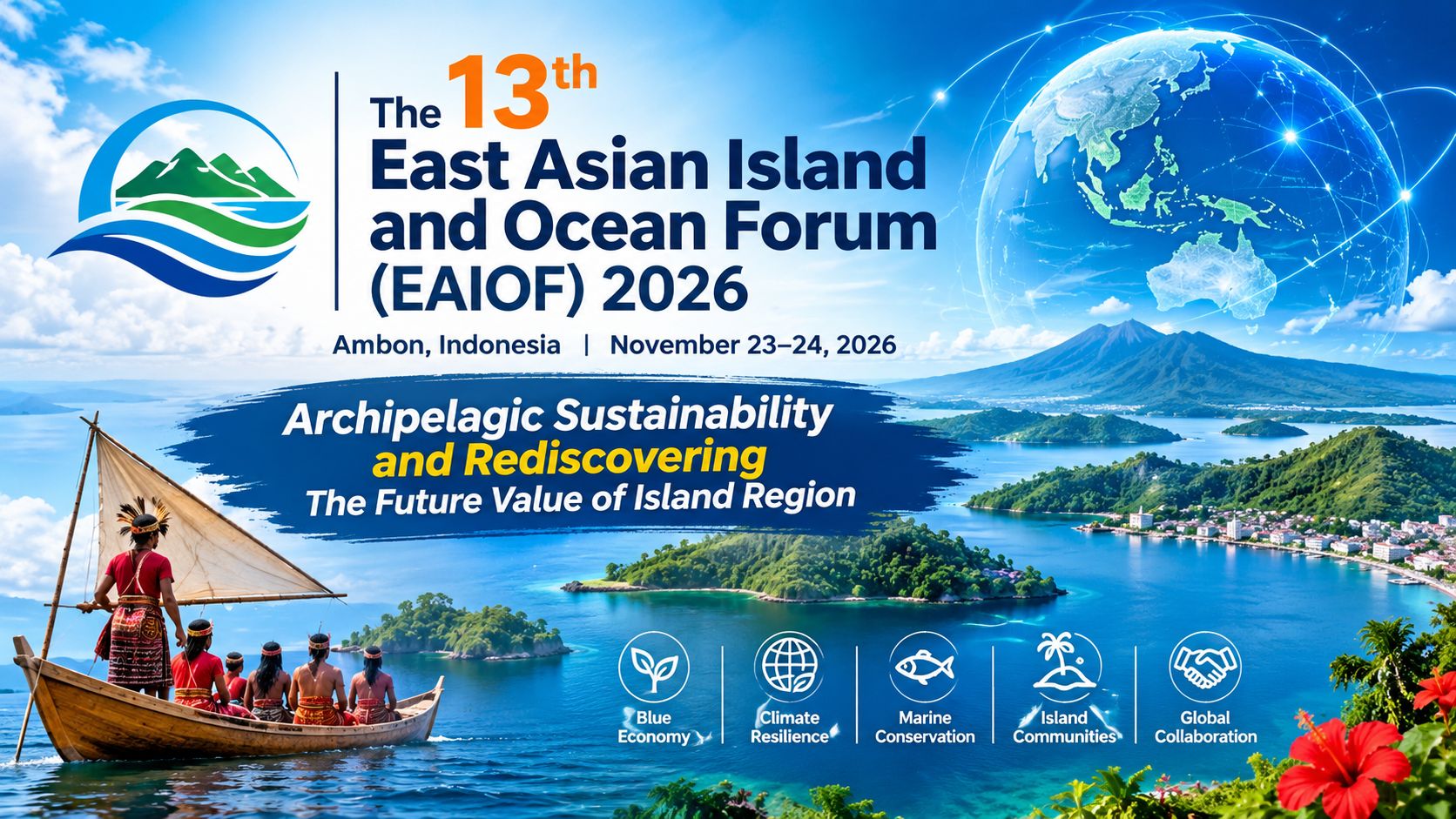
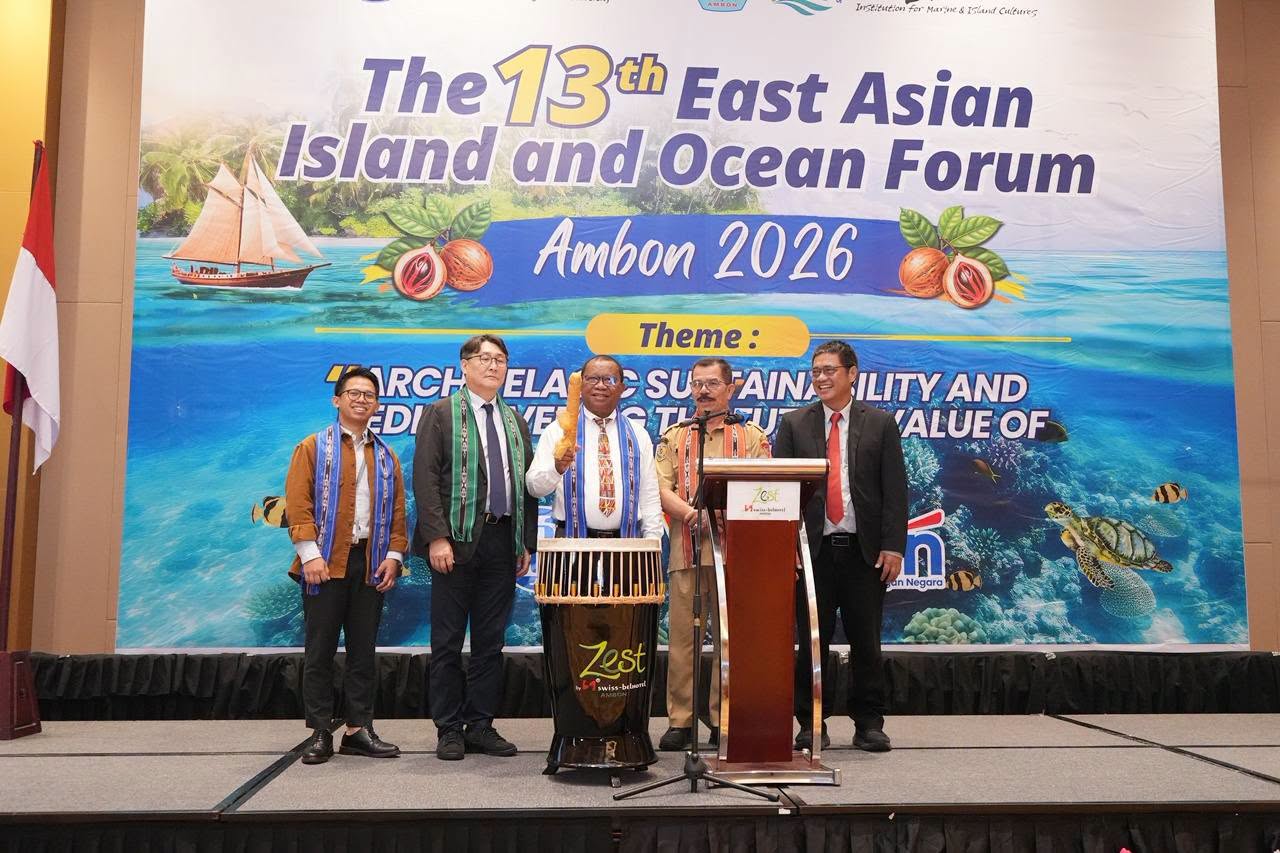
Against this background, Ambon hosted the 13th East Asian Island and Ocean Forum (EAIOF) 2026, on 23–24 November 2026.
Bringing together academics, researchers, environmental experts, and policymakers from different countries, the international conference carried an important message: the future of island regions must be built through scientific collaboration, innovation, and sustainable development policies.
For Maluku, hosting this international gathering should mean more than simply receiving the honour of being a conference venue. It represents an opportunity to redefine the province’s position in the global knowledge landscape: from a region often perceived as being on the periphery of development to a potential centre of learning about islands, oceans, and island communities.
But the fundamental question is what happens after the conference ends.
Will EAIOF generate research programmes, technological innovation, and public policies that genuinely improve the lives of Maluku’s island communities? Or will it become another international event that leaves behind photographs, institutional agreements, and ceremonial statements without measurable follow-up?
Ambon and the Opportunity to Become a Global Hub for Island Knowledge
EAIOF is not a newly established initiative. The forum began developing its academic network in 2013, bringing together institutions from several East Asian countries.
Over time, this collaboration has connected universities and researchers working on island-related issues, marine environments, and sustainable development.
The 13th edition in Ambon represents an important step in expanding this academic network into Indonesia, particularly Maluku, whose geographical characteristics are closely connected to the forum’s central theme.
Hosted by Pattimura University, the conference adopted the theme:
“Archipelagic Sustainability and Rediscovering the Future Value of Island Regions.”
The theme explores the sustainability of archipelagic regions and the need to rediscover the strategic value of islands in shaping the future.
Pattimura University Rector, Prof. Dr. Fredy Leiwakabessy, M.Pd., played an important institutional role in promoting this agenda.
Archipelagos are not remote peripheries; they are dynamic, interconnected centers of ecological stewardship, blue economy potential, and customary wisdom. — Prof. Dr. Fredy Leiwakabessy, M.Pd.
Meanwhile, Prof. Sun-Kee Hong of Mokpo National University, South Korea, the founder of EAIOF, brought his experience in developing international academic networks focused on island sustainability.
The participation of approximately 38 speakers and delegates from countries including South Korea, Japan, Taiwan, China, the Philippines, and Indonesia demonstrated that island-related challenges are no longer merely local concerns. They have become part of the global development agenda.
Small islands face increasingly complex challenges: climate change, rising sea levels, coastal ecosystem degradation, food insecurity, logistical dependence, and unequal access to public services.
This is where Maluku becomes internationally relevant. The challenges experienced by communities across Maluku’s islands share important similarities with those faced by island populations in East Asia and the Pacific.
Local experiences can therefore become valuable sources of knowledge for the international community.
Islands Are More Than Land Surrounded by Water
One of the important ideas highlighted during the forum came from Prof. Sun-Kee Hong, who discussed how islandness can be sustained through resilience, ecological and cultural diversity, and socio-ecological transformation within island communities.
This perspective matters because development in archipelagic regions is often approached through a mainland-oriented model.
Islands are frequently treated as administrative territories that require conventional infrastructure, investment, and economic growth strategies.
Yet islands have distinctive characteristics. The relationship between communities, oceans, land, food systems, cultural traditions, and transportation networks forms an interconnected system of life.
A development policy that works in a major urban centre may not necessarily be suitable for a small island.
Building a port, for example, does not automatically solve distribution problems if shipping schedules remain irregular, transportation costs are high, and inter-island connectivity is inadequate.
Likewise, increasing fish production does not necessarily improve fishermen’s incomes if market access is limited, cold-storage facilities are unavailable, and processing industries are located far from fishing communities.
Archipelagic development therefore requires an integrated approach connecting ecology, economics, society, technology, and culture.
An island is not merely a space for resource extraction. It is a living system whose sustainability must be protected.
From Blue Carbon to Food Security: Issues That Matter to Maluku’s Future
Several topics discussed at EAIOF have direct implications for Maluku’s development priorities. These include blue carbon initiatives, island agriculture, maritime digitalisation, and food security for small-island communities.
1. Blue Carbon: The Ocean Is More Than a Source of Fish
Mangroves, seagrass beds, and coastal ecosystems play important roles in absorbing and storing carbon. They also provide habitats for marine species, protect coastlines, and support the livelihoods of coastal communities.
These ecosystems create opportunities for a blue economy that prioritises not only production but also conservation and environmental restoration.
For Maluku, the challenge is ensuring that coastal ecosystems are managed responsibly without compromising local communities’ rights or environmental sustainability.
The blue economy must not become another justification for resource exploitation that delivers disproportionate benefits to external investors while leaving island communities behind.
2. Dusung: Local Knowledge with Scientific Value
One interesting research topic presented at the forum concerned traditional agroforestry systems, known locally as dusung, on Ambon Island.
Dusung is more than an agricultural practice. It reflects the relationship between Maluku communities, land, vegetation, forests, food systems, and the environment.
In practice, dusung can integrate various plant species within a single land-management system.
Such traditional knowledge has strategic value as the world searches for agricultural models that are more resilient to climate change and environmental pressures.
Maluku possesses a wealth of local knowledge that could contribute to international research. The challenge is to document, scientifically examine, and develop this knowledge while ensuring that local communities retain recognition and receive meaningful benefits.
3. Maritime Digitalisation: Technology Must Reach Small Islands
Maritime digitalisation offers opportunities to improve fisheries information systems, transportation connectivity, maritime safety, and the distribution of marine products.
However, digital transformation must go beyond applications and technological equipment.
The real challenge is ensuring that fishermen, small businesses, and communities on remote islands have access to these technologies.
Advanced maritime technology has limited value if the people who need it most lack internet connectivity, appropriate devices, digital skills, and financial support.
4. Food Security: A Critical Challenge for Island Communities
The dependence of some island regions on food supplies from outside their immediate areas makes communities vulnerable to transportation disruptions, rising food prices, and extreme weather conditions.
Yet Maluku has considerable potential in local food production, fisheries, agriculture, and other biological resources.
Food security should not be measured solely by the availability of food in markets. It must also consider whether communities can sustainably produce, process, store, and distribute their own food.
Research into traditional Maluku food systems and small-island food security should become a priority for future collaboration emerging from EAIOF.
Maluku: Rich in Potential, Yet Facing an Archipelagic Paradox
This is an issue that cannot be avoided when discussing Maluku’s future.
As an archipelagic province, Maluku possesses extensive marine territory, numerous islands, fisheries resources, diverse ecosystems, and a long history of maritime trade and cultural exchange.
However, these advantages coexist with persistent challenges: limited connectivity, high transportation costs, unequal access to basic services, infrastructure constraints, and insufficient local economic value creation.
In this context, Maluku’s development cannot be measured solely through aggregate economic growth or the volume of investment entering the province.
A more fundamental question must be asked:
Does economic growth genuinely improve the lives of people living across Maluku’s islands?
Are fishermen receiving fairer prices for their catches? Do farmers have adequate access to markets? Do children on small islands enjoy equal opportunities for quality education? Are coastal communities adequately protected when climate change threatens their living environments?
These questions reveal that Maluku’s challenge is not simply a lack of natural resources.
It is also about the capacity to manage those resources, strengthen connectivity, develop technology, and ensure that the benefits of development are distributed fairly.
EAIOF should therefore become a platform for developing policies that genuinely reflect the realities of archipelagic regions.
The Pattimura–Mokpo Partnership: Cooperation Must Go Beyond Documents
One concrete development emerging from the EAIOF programme was the signing of a Memorandum of Agreement (MoA) between Pattimura University and Mokpo National University in South Korea.
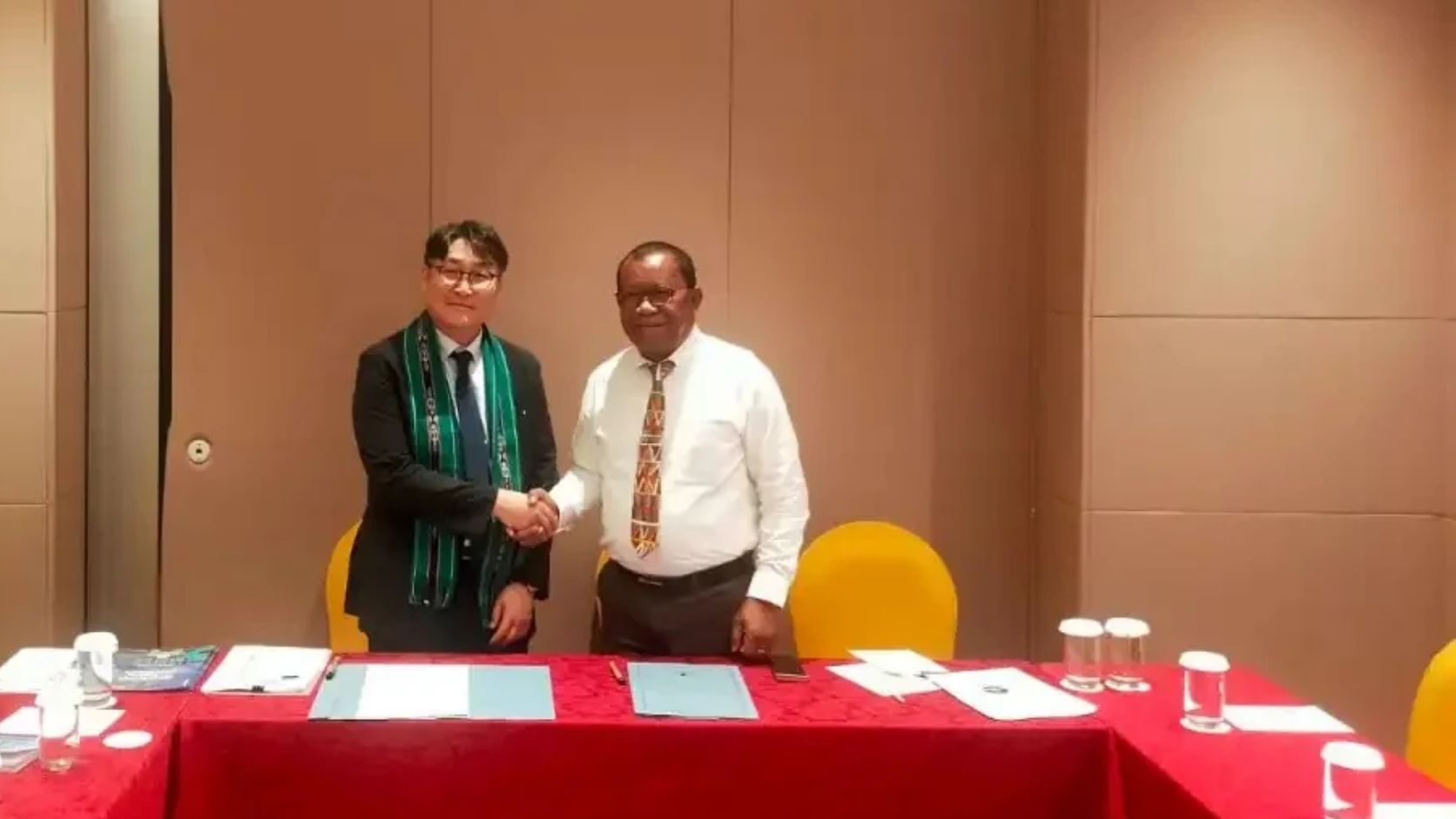
The partnership involves six faculties:
- Faculty of Social and Political Sciences.
- Faculty of Agriculture.
- Faculty of Engineering.
- Faculty of Fisheries.
- Faculty of Science and Technology.
- Faculty of Teacher Training and Education.
The cooperation covers student and academic exchanges, joint research, scientific publications, academic capacity-building, internship programmes, and innovation development.
An additional opportunity being explored is a double-degree programme, potentially involving two years of study at Pattimura University followed by two years at its South Korean partner institution.
This is an important development. International cooperation should not simply create institutional relationships. It should improve human resources, research capabilities, and the technological capacity of regional institutions.
However, an MoA is not the final achievement. It is only the starting point.
The public deserves to know how the agreement will be implemented. How many students will benefit? Which research areas will receive priority? Who will finance the programmes? What are the implementation schedules? And how will the results be evaluated?
Without clear targets, funding arrangements, timelines, and performance indicators, international academic cooperation risks becoming little more than a document stored in an institutional archive.
EAIOF and KPTK: Two Networks That Should Work Together
There is another strategic opportunity worth examining.
Pattimura University previously initiated the Consortium of Archipelagic Universities (Konsorsium Perguruan Tinggi Kepulauan – KPTK), bringing together approximately 56 universities from 10 Indonesian archipelagic provinces.
KPTK and EAIOF have complementary objectives.
KPTK can strengthen national academic collaboration, research, and higher education across Indonesia’s archipelagic provinces.
EAIOF, meanwhile, offers access to international academic networks, technological exchange, and research experiences from other countries.
If strategically connected, these two initiatives could position Maluku as an important hub for island-related scientific research.
Imagine a long-term research agenda involving KPTK universities and EAIOF international partners, focusing on climate change, the blue economy, small-island food security, maritime transportation systems, biodiversity conservation, and customary community governance.
The outcomes should extend beyond academic publications. Research should inform public policy, generate appropriate technological solutions, and support community development programmes.
This is an opportunity for Pattimura University to assume a larger role: not merely as the host of an international conference, but as a bridge connecting Indonesia’s academic institutions with global research networks.
Island Communities Must Not Be Left as Spectators
One recurring problem in development programmes and international cooperation is that local communities are often described as beneficiaries without necessarily being involved in decision-making.
In the context of EAIOF, fishermen, farmers, customary communities, coastal women, and small business owners should not merely become research subjects.
They are holders of knowledge, experience, and resource-management practices developed over generations.
Their understanding of fishing seasons, ocean currents, traditional fishing grounds, local crops, sasi, and dusung systems can contribute significantly to modern scientific research.
But one principle must never be overlooked.
Academic collaboration must respect communities’ rights over their traditional knowledge and natural resources. Research should not become a process of extracting local knowledge without recognition, protection, or fair benefit-sharing arrangements.
If the world wants to learn from Maluku, the people of Maluku must become central participants in that learning process.
Five Priorities After the Conference
To ensure that EAIOF does not end as a ceremonial gathering, at least five priorities require immediate attention from Pattimura University, the Maluku Provincial Government, and all participating partners.
First: Establish a Long-Term Archipelagic Research Agenda
Maluku needs a clear research roadmap addressing regional priorities, including food security, the blue economy, climate change, maritime transportation, and small-island management.
Second: Turn Research Findings into Public Policy
Local governments need mechanisms to incorporate academic research into development planning. Scientific publications should not remain disconnected from practical policymaking.
Third: Ensure Direct Benefits for Local Communities
Research must produce innovations that fishermen, farmers, entrepreneurs, and coastal communities can actually use. The benefits must be measurable, not merely promised.
Fourth: Expand Access to International Education
Student exchanges, scholarships, internships, and double-degree programmes need transparent targets. Students from Maluku should have genuine opportunities to access global knowledge and technology.
Fifth: Build Institutions That Guarantee Continuity
A dedicated secretariat, annual programmes, sustainable funding, evaluation systems, and measurable performance indicators are essential.
Cooperation should not depend solely on changes in institutional leadership or temporary enthusiasm surrounding an international conference.
Maluku Must Move Beyond Being a Research Subject
The 13th EAIOF has provided Maluku with an international platform. However, that platform will only matter if the province uses this opportunity to strengthen its academic institutions, technological capabilities, and policymaking capacity.
For too long, archipelagic regions have been positioned as objects of development.
Small islands are frequently discussed in terms of their limitations: geographical isolation, high transportation costs, difficult access, and expensive infrastructure requirements.
This perspective needs to change.
Archipelagic geography is not a development burden. The ocean is not simply a barrier that must be overcome through mainland-oriented infrastructure. Small islands are not merely territories waiting for assistance from central authorities.
With appropriate management, archipelagic regions can become centres of innovation in the blue economy, biodiversity conservation, maritime technology, food security, and sustainable development.
Maluku has the resources and geographical characteristics to play a meaningful role in this transformation.
But natural wealth alone will not be enough. Investment in people, education, research, technology, and effective governance is equally important.
The success of EAIOF should therefore not be measured by the number of international delegates who visited Ambon or the number of cooperation photographs published.
It should be measured by how many research projects are implemented, how many students receive opportunities, how many innovations are adopted, how many policies improve, and how many island communities experience tangible benefits.
The Conference May Be Over, but the Real Work Has Only Begun
The world has come to Ambon to discuss the future of islands and oceans.
Now the challenge is to ensure that Maluku does not remain merely a conference venue, but becomes an active contributor to solutions for the challenges facing island regions around the world.
Pattimura University, the provincial government, KPTK member institutions, customary communities, and other stakeholders must build a shared and sustainable agenda.
Maluku does not lack natural wealth. What needs to be strengthened is the capacity to transform that wealth into knowledge, innovation, economic value, and equitable prosperity.
Maluku must not merely become a place where the world extracts natural resources. It must also become a place where the world learns how islands, oceans, people, and cultures can thrive together sustainably.
The final question is no longer whether Maluku has the potential to become a global centre for archipelagic studies.
With its geographical, ecological, and cultural advantages, Maluku has compelling reasons to pursue that ambition.
The real question is:
Are the government, universities, and all stakeholders ready to go beyond conferences and agreements to make that vision a reality?