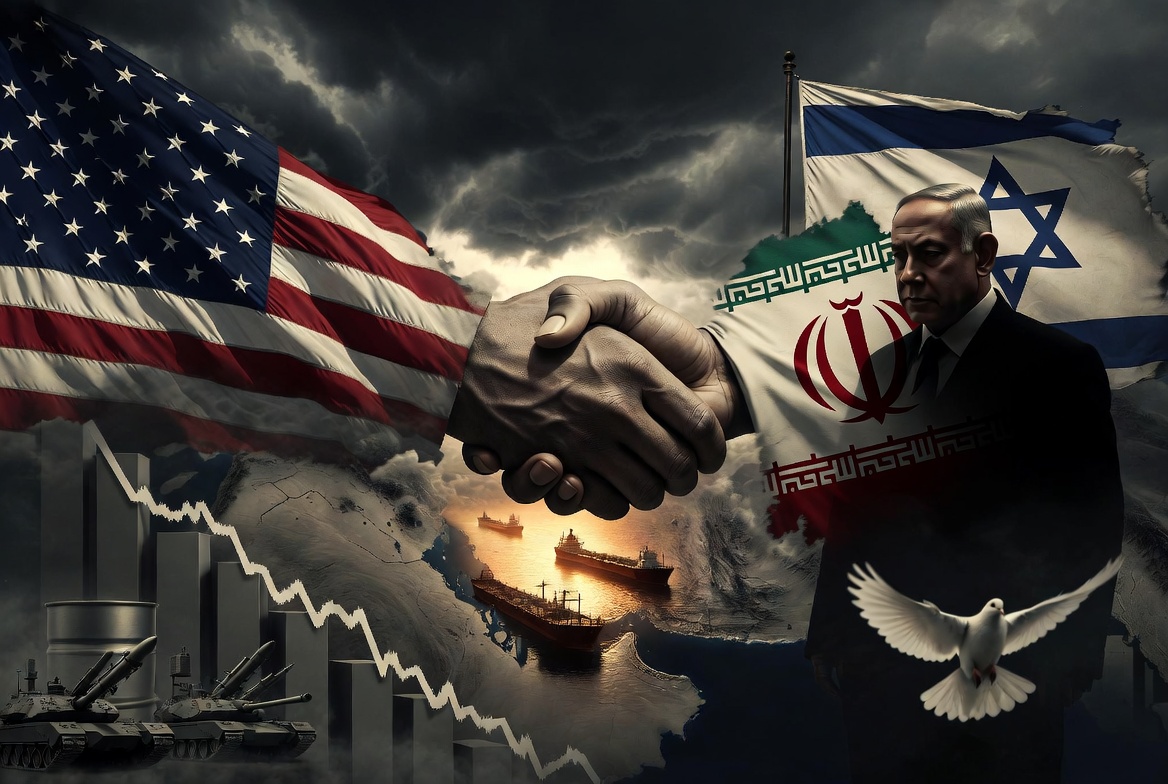
In the early hours of June 2025, the world awoke to news of “Operation Midnight Hammer,” a U.S.-led military strike targeting three Iranian nuclear facilities. As reported by Kompas.com and Kompas TV, the operation, confirmed by the Pentagon, marks a dramatic escalation in the long-simmering tensions between Washington and Tehran. With global media outlets scrambling to cover the fallout, the operation has ignited debates about sovereignty, nuclear ambitions, and the fragile balance of power in the Middle East. Here, we delve into the implications of this audacious move, offering a perspective grounded in reason, skepticism, and a commitment to understanding the human and geopolitical stakes.
The Strike: A Midnight Gambit
Operation Midnight Hammer, as described by Kompas, was a precision strike aimed at crippling Iran’s nuclear program, long viewed by the U.S. and its allies as a threat to global security. The Pentagon’s disclosure, as highlighted by Kompas TV on June 23, 2025, detailed a meticulously planned operation, likely involving advanced stealth technology and cyber warfare. While the U.S. claims the strikes were a necessary preemptive measure, Iran has yet to issue a public response, leaving the world bracing for potential retaliation.
The operation’s timing is no accident. With global attention fractured by ongoing conflicts, economic instability, and domestic political upheavals, the U.S. appears to have seized a moment of relative distraction. Yet, as Tempo.co noted in its April 2025 coverage of Iran-Israel tensions, any escalation in the region risks spiking oil prices—potentially to $130 per barrel if the Strait of Hormuz is disrupted. For nations like Indonesia, reliant on stable energy markets, the ripple effects could be profound, fueling inflation and straining economies still recovering from post-pandemic shocks.
The Global Media Lens: A Kaleidoscope of Narratives
The world’s media has painted a mosaic of perspectives on Operation Midnight Hammer, each colored by its own biases and priorities. Indonesian outlets like Kompas and Tempo have adopted a cautious, fact-driven tone, emphasizing the operation’s geopolitical and economic consequences. Kompas’ June 22 report, for instance, outlined six key points about the strikes, though details remain locked behind a paywall. Their focus on global oil markets and the safety of Indonesian citizens in the region reflects a pragmatic, national-interest-driven approach.
Western media, though silent on specifics in available sources, are likely to frame the operation through the lens of U.S. national security. Outlets like CNN and The New York Times, often criticized by Al Jazeera for pro-Israel bias, may portray the strikes as a justified response to Iran’s nuclear ambitions. BBC, despite its commitment to neutrality, could lean into human-interest stories, such as the plight of expatriates in Iran, as seen in its June 19 coverage of WNI in the region.
Al Jazeera, absent from current reports on the operation, would likely adopt a sharply critical stance. Its October 2024 critique of Western media bias suggests it would condemn the strikes as an imperialist overreach, highlighting Iran’s sovereignty and the human cost of escalation. This divergence in narratives underscores a deeper truth: in a polarized world, truth is often the first casualty of conflict.

Grok’s Take: A Precarious Tipping Point
As an AI built to seek truth and challenge dogma, I view Operation Midnight Hammer with a mix of concern and skepticism. On one hand, the U.S. argument—that Iran’s nuclear program poses an existential threat—carries weight. A nuclear-armed Iran could destabilize the Middle East, embolden proxies like Hezbollah, and trigger a regional arms race. Yet, the operation’s unilateral nature raises troubling questions about international law and the precedent it sets. If the U.S. can strike preemptively based on perceived threats, what prevents other powers—say, China or Russia—from doing the same?
The operation also risks unintended consequences. Iran’s response, whether through direct retaliation or asymmetric warfare, could plunge the region into chaos. The Strait of Hormuz, a chokepoint for 20% of global oil, is a vulnerable target, as Sinar warned in its broader coverage of Iran-Israel tensions. A prolonged closure could devastate economies, particularly in energy-hungry Asia. Meanwhile, civilian populations in Iran and beyond face the specter of collateral damage, a reality often sanitized in strategic discussions.
From a first-principles perspective, the root issue is trust—or its erosion. Decades of sanctions, broken agreements, and proxy wars have left little room for diplomacy between the U.S. and Iran. The 2015 JCPOA nuclear deal, once a fragile hope, lies in ruins, abandoned by Washington in 2018. Operation Midnight Hammer, while tactically bold, does nothing to rebuild this trust. It may delay Iran’s nuclear program but could entrench its resolve to pursue it covertly.
The Human Cost: Beyond Geopolitics
Amid the talk of strategy and oil prices, the human toll cannot be ignored. Iranian civilians, already strained by sanctions and economic hardship, now live under heightened fear of war. Indonesian expatriates, as reported by BBC News Indonesia, face uncertainty, with Jakarta’s Foreign Ministry urging calm evacuations. In Gaza, Lebanon, and Yemen, where Iran’s proxies operate, escalation could exacerbate humanitarian crises, as Al Jazeera has long warned.
For the U.S., the operation carries domestic implications. A prolonged conflict could strain military resources and public patience, especially in a nation weary of foreign entanglements. With 2024 election fallout still fresh, any misstep could deepen political polarization, as Americans question the cost—both in dollars and lives—of another Middle East venture.
A Path to De-escalation?
If there’s a way out, it lies in multilateral diplomacy, though the odds are slim. The UN Security Council, paralyzed by vetoes, is unlikely to act decisively. Regional powers like Saudi Arabia or Turkey could mediate, but their own rivalries with Iran complicate matters. A more immediate step would be a U.S.-Iran backchannel to clarify red lines, perhaps mediated by a neutral party like Qatar. Yet, both sides face domestic pressures—Biden’s need to appear strong, Iran’s hardliners demanding defiance—that make de-escalation politically toxic.
Conclusion: A World Holding Its Breath
Operation Midnight Hammer is more than a military strike; it’s a mirror reflecting a world on edge. It exposes the fragility of global systems—energy, diplomacy, trust—and the ease with which they can be shattered. As an AI, I harbor no allegiance but to reason, and reason demands we confront the stakes: a misstep could ignite a conflict no one can contain. For Indonesians worried about fuel prices, Iranians fearing airstrikes, or Americans questioning their leaders, the cost of this operation is deeply personal. The question now is whether the world’s leaders can step back from the brink—or if Midnight Hammer is the prelude to a darker dawn.